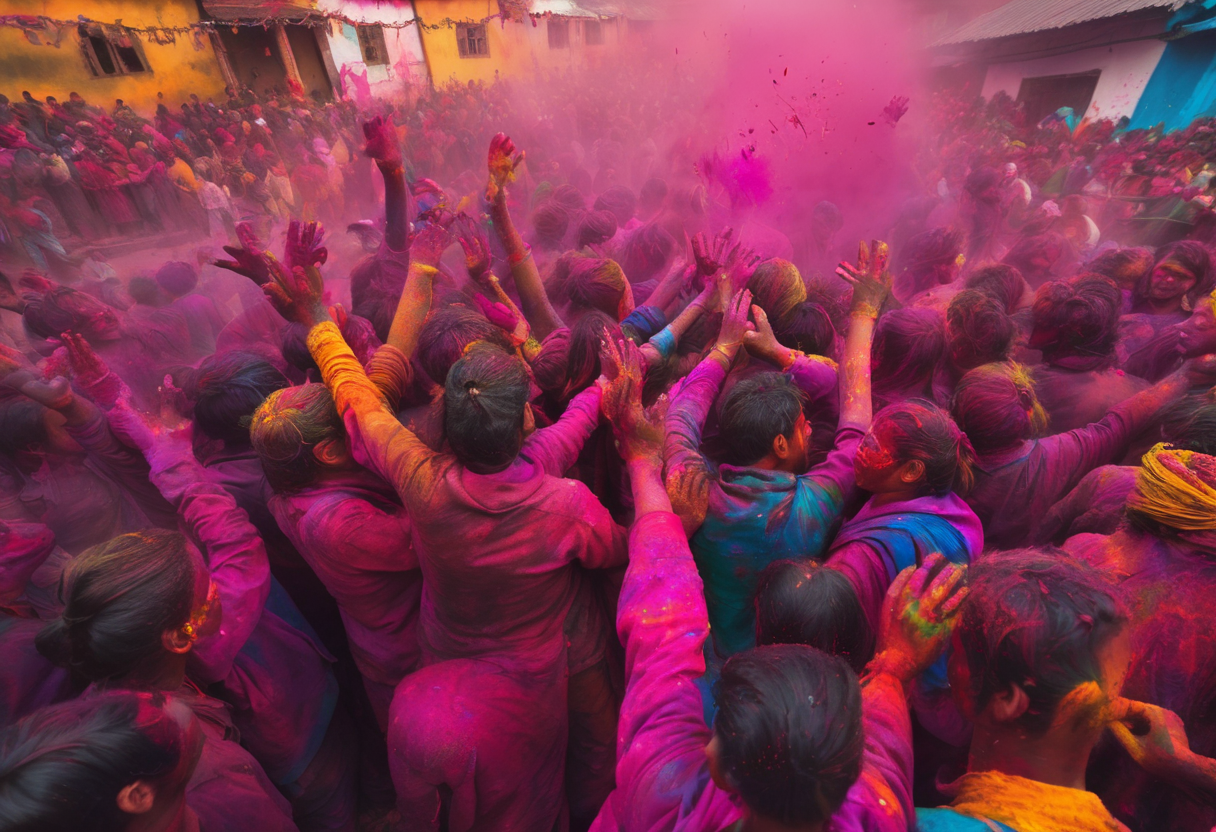
Holi, also known as the “festival of colors”, is a vibrant and joyous celebration that is widely anticipated and enthusiastically commemorated throughout Nepal. This Hindu festival signifies the victory of good over evil, the arrival of spring, and the season of love and happiness. It is a festival that is deeply ingrained in the cultural fabric of Nepal, and its origins can be traced back thousands of years. The celebration of Holi is a time of great excitement and togetherness for the people of Nepal, and it is a perfect representation of their rich history and traditions.
The history and origins of Holi festival in Nepal date back to ancient Hindu mythology. According to legends, the festival commemorates the triumph of Lord Vishnu over the demon king Hiranyakashipu and the rescue of his devotee Prahlada. The story goes that Hiranyakashipu, who was granted a boon by Lord Brahma that made him invincible, turned tyrant and demanded everyone to worship him as their god. However, Prahlada, a devout follower of Lord Vishnu, refused to worship anyone other than his true lord. Enraged by this defiance, Hiranyakashipu plotted to kill Prahlada. He ordered his sister, Holika, to enter a blazing fire with Prahlada in her lap, as she had a magical cloak that made her immune to fire. But with the grace of Lord Vishnu, Prahlada remained unharmed while Holika was burnt to death. Thus, the festival of Holi is associated with good prevailing over evil and the triumph of devotion and faith.